
Homeowner Troubleshooting Guide
Garage Door Won’t Open or Close? Troubleshooting Guide
Start with the symptom—not a guess. This garage door troubleshooting guide explains what you can check safely, what the warning signs may mean, and when operating the door could make the problem worse.
Technical review by Denis · Garage door technician with 15 years of field experience · Updated September 2026
What Should You Check First?
If a garage door won’t open or close, first confirm that the opener has power, the wall control is not locked, the doorway is clear, and the safety sensors are clean and aligned. Stop operating the door if it is crooked, unusually heavy, has a loose cable, or shows a visible gap in the spring.
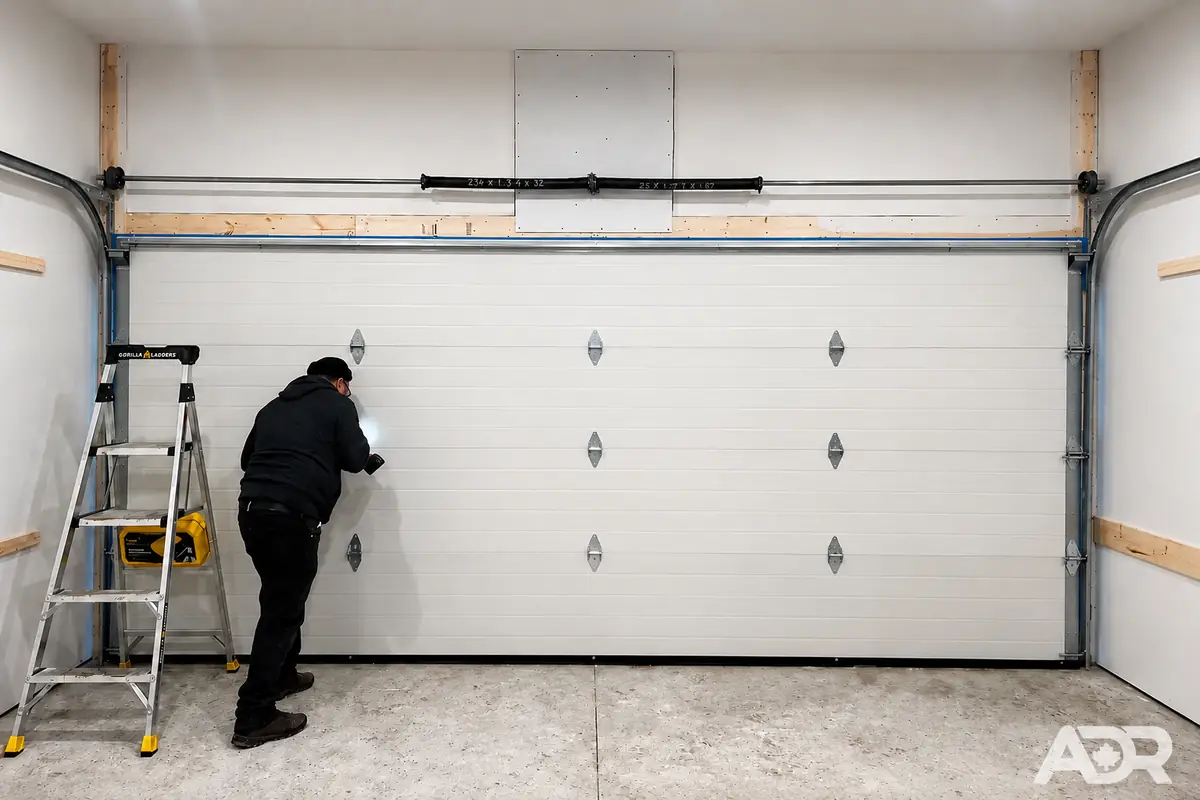
Stop using the door if it is crooked, hanging or unusually heavy
Keep people, pets and vehicles away from an unstable door. Do not touch a loose cable, bottom bracket or spring. These parts may remain under strong tension even when the door is not moving. If the door is open, do not stand or park underneath it.
Start Here
A 60-Second Troubleshooting Path
Before looking at individual parts, identify which of these three situations matches what the door is doing. This prevents an electrical problem from being confused with a lifting-system failure.
Does the opener respond?
No light, sound or movement points first to power, wall-control lock mode, the remote or an opener electrical fault.
Does the door begin moving?
A hum, strain or movement of only a few inches can indicate that the opener is meeting excessive door weight or resistance.
Does it move evenly?
A lower side, loose cable, roller outside the track or jerky travel is a mechanical warning. Stop the door instead of testing it again.
Quick Diagnosis
Garage Door Symptom Checker
One symptom can have several causes. Use this table to narrow down the possibilities, but do not dismantle or adjust the lifting system to confirm a diagnosis.
| What you notice | Possible causes | Safe first check | Next step |
|---|---|---|---|
| Nothing happens at all | No power, tripped breaker, wall-control lock, remote battery or opener fault | Confirm the opener is plugged in; test the wall button; check the breaker | Safe basic check |
| Opener hums, but the door does not lift | Broken spring, disengaged trolley, failed opener gear or binding door | Look for a visible gap in the spring without touching it | Stop if door feels heavy |
| Door rises a few inches, then stops | Broken or weak spring, resistance in the tracks, force-setting issue | Look for an obstruction or visible damaged hardware | Do not keep retrying |
| Door will not close | Blocked or misaligned sensors, damaged wire, travel setting or mechanical resistance | Clean sensor lenses and remove objects from the doorway | Safe basic check |
| Door touches the floor and reverses | Travel-limit setting, floor resistance, damaged seal or binding hardware | Clear the threshold and inspect the bottom seal visually | Observe carefully |
| One side is lower than the other | Broken or slipped cable, drum issue, off-track roller or uneven spring tension | Do not operate the door; inspect only from a safe distance | Professional repair |
| Motor runs, but the door stays still | Emergency release is disconnected, trolley failure or internal opener damage | From the floor, see whether the trolley is connected | Do not climb |
| Grinding, popping or scraping | Worn rollers, loose hardware, track contact, spring or cable problem | Stop and look for crooked movement or loose parts | Stop if movement is uneven |
What information helps identify the problem? Note whether the problem happens in both directions, whether it began suddenly, and whether you heard a bang or saw a cable become loose. A wide photo taken from inside the garage—with nobody standing under the door—can show the spring, tracks and general door position without touching any hardware.
Opening Problems
Why Your Garage Door Won’t Open
A door that will not open may have a simple control problem—or the opener may be trying to lift a door with a failed spring. The sound and amount of movement provide useful clues.
No sound and no movement
Start with the power supply. Confirm that the opener is plugged in, test the wall control and check whether the garage circuit breaker or GFCI outlet has tripped. If the wall control works but the remote does not, replace the remote battery and make sure the wall station’s lock mode is off.
The opener hums or strains
A spring may have broken, leaving the opener to handle much more resistance than normal. With the door closed, a torsion spring above the door may show a visible separation. You may also have heard a sharp bang earlier.
See GTA repair options →The door opens only a few inches
This commonly points to a lifting or balance problem. A weakened spring, broken spring, damaged cable or binding roller can make the door too heavy for the opener. Repeated attempts may overheat the motor or damage internal components.
The motor runs, but the door stays down
The emergency-release trolley may be disconnected, or part of the opener’s drive system may have failed. Look from floor level to see whether the opener trolley moves along the rail. Do not climb onto a ladder beside an unstable door.
See opener repair information →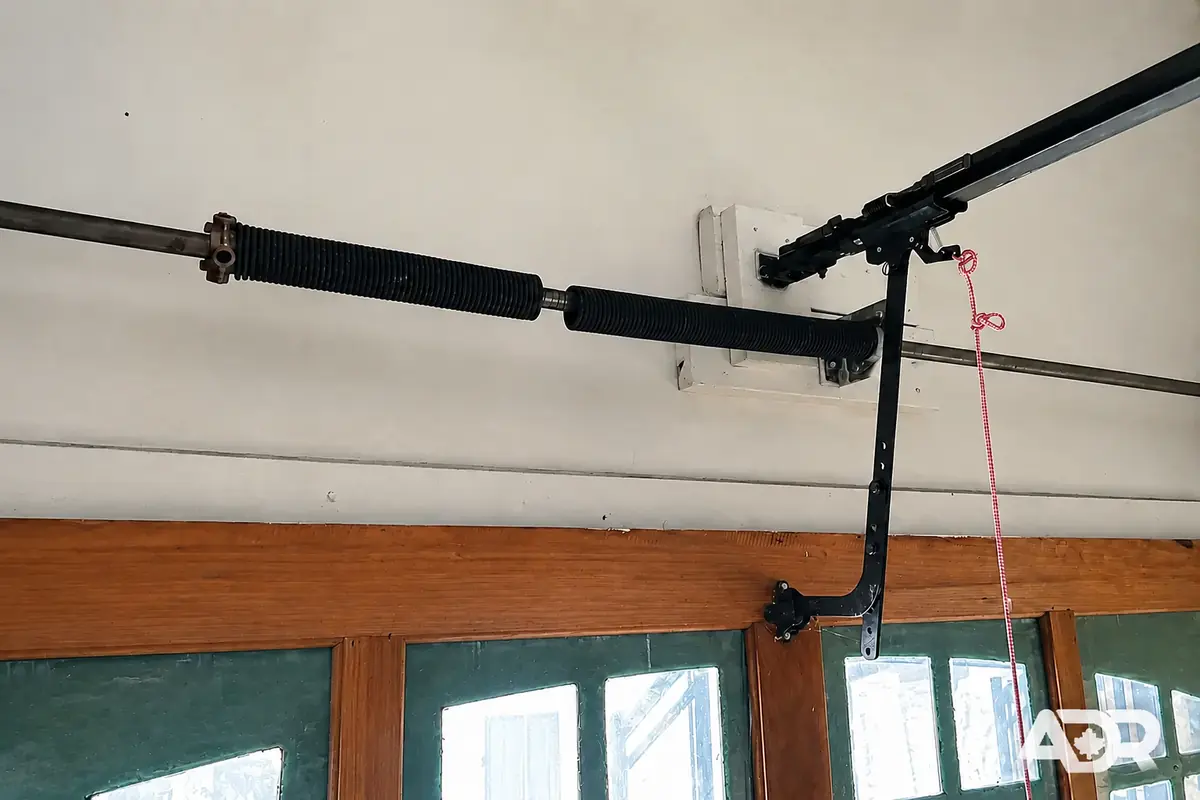
Closing Problems
Why Your Garage Door Won’t Close
When an automatic door refuses to close, the safety sensors are a sensible first check. The two small photo eyes sit near the floor on opposite sides of the opening. Dirt, moisture, a stored item or slight misalignment can interrupt their beam.
If the door starts down and reverses, note where it changes direction. Sensor issues, opener settings or mechanical resistance can all affect closing; reaching the floor before reversing more often points to a travel-limit, seal or threshold issue.
Do not defeat the safety system
Do not tape down the wall button, bypass the sensors or increase opener force to make a resistant door close. The cause should be found before the safety response is altered.
Five safe checks
- Remove boxes, tools, leaves, snow and other objects from the doorway.
- Wipe both sensor lenses gently with a clean, soft cloth.
- Check whether both sensors show their normal steady indicator lights.
- Look for a sensor bracket that has been bumped or a wire that is visibly loose or damaged.
- Check the bottom seal and floor for ice, stones or other resistance.
If the door is crooked, cables are loose or a roller has left its track, stop troubleshooting and keep the door still.
Uneven Movement
Why Is One Side of the Garage Door Lower?
A crooked garage door is not usually a remote-control or sensor problem. One lifting cable may be broken, loose or off its drum; a roller may have left the track; or the door may be binding because of damaged hardware.
The door’s weight is no longer being supported evenly. Continuing to operate it can pull additional rollers out of the track, bend a panel or cause the door to jam in the opening.
Read ADR’s cable repair information →
Leave a crooked door where it is
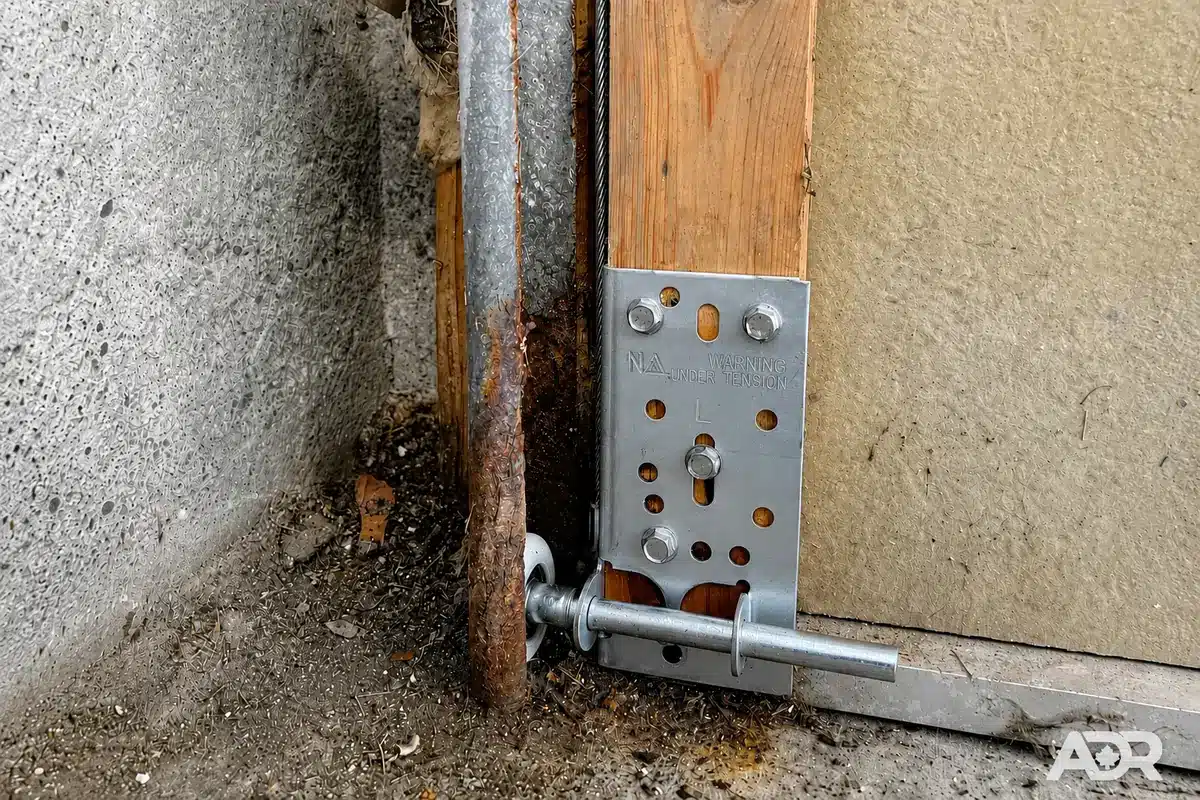
Do not try to straighten it, push a roller back into place or wind a loose cable onto the drum. Avoid standing on the side toward which the door is leaning. A technician should secure the door before correcting the lifting system.
Listen for Clues
What Different Garage Door Noises Can Mean
A new sound does not identify one exact failed part, but it can show where to look and how urgently the system needs attention.
Squeaking
Dry or worn rollers and hinges are common possibilities. Inspect for visible wear before applying a garage-door-rated lubricant to approved points.
Grinding
A worn roller, opener gear or metal part rubbing the track may be involved. Stop if movement also becomes rough or crooked.
Popping
A binding roller, stressed hinge or spring-related problem may release suddenly as the door moves. An inspection is safer than repeated testing.
Sharp bang
A torsion spring can make a loud bang when it breaks. The door may then feel very heavy or open only a few inches.
Noise plus movement matters more than noise alone. A familiar squeak on a door that remains level is different from a new scraping sound accompanied by shaking or one-sided travel.
Ontario Winters
Garage Door Frozen Shut or Stuck in Cold Weather
Snowmelt can collect along the bottom seal and freeze it to the concrete overnight. Cold weather can also expose a weak spring, stiff roller or aging seal that was already close to failure.
If the opener starts pulling while the seal is frozen down, stop it. Repeated attempts can tear the seal or strain the opener. Clear loose snow, melt the ice gently without an open flame, and dry the threshold before trying again.
Reduce winter sticking
- Keep snow and slush away from the closed-door threshold.
- Check the bottom seal for cracks, flattening or missing sections.
- Keep the drainage path outside the garage clear.
- Do not use excessive opener force to break an ice bond.
- Have uneven or heavy movement checked rather than blaming temperature alone.
A Safe Sequence
What to Do When the Door Stops Working
Keep the area clear. Move children and pets away. If the door is hanging or crooked, do not move a vehicle underneath it.
Stop repeated opener attempts. Trying again and again can turn one failed component into damage elsewhere in the system.
Observe without dismantling. Note the sound, how far the door travels, sensor-light behaviour and whether one side is lower.
Complete only basic checks. Power, remote batteries, lock mode, obvious doorway obstructions and gentle sensor cleaning are reasonable homeowner checks.
Share the symptoms when booking. A photo from inside the garage and a short description can help the service team understand what may be needed.
This guide is intended for observation and basic homeowner checks, not spring, cable, bottom-bracket or track repair. For model-specific control, sensor and indicator-light instructions, use the owner’s manual supplied by the opener manufacturer. For independent industry guidance, review DASMA’s garage door system safety guidance.
Local Residential Service
Need the Door Inspected?
ADR checks the complete operating system before recommending work. Same-day appointments may be available when scheduling and required parts permit.
Richmond Hill and the GTA
Residential garage door troubleshooting and repair across Richmond Hill and nearby GTA communities.
647-797-4112
Richmond Hill local repair page →Barrie and nearby Simcoe County
Residential repair service for Barrie, Innisfil and surrounding communities within ADR’s service area.
705-242-7275
Barrie repair service →Common Questions
Garage Door Troubleshooting FAQs
The opener trolley may be disconnected, an internal opener component may have failed, or the door may have a broken spring that prevents normal lifting. If the door feels heavy, a spring is visibly separated or a cable is loose, stop using the opener and arrange an inspection.
A broken or weakened spring, damaged cable, binding roller or excessive resistance can make the door too heavy for the opener. Repeated attempts can strain the opener, so leave the door closed if possible and have the lifting and balance system checked.
The safety sensors may be blocked or misaligned, the opener’s travel limit may be incorrect, or the door may be meeting resistance. Clear the doorway and gently clean the sensor lenses. If the door is crooked, binding or showing loose hardware, stop operating it.
A door with a broken spring can be extremely heavy and difficult to control. Attempting to lift it can cause injury or additional damage. Do not pull the emergency release while an unsupported door is open, and do not attempt to lift a door with a suspected spring failure yourself.
Stop using the door and keep clear of it. Do not wind the cable back onto the drum or adjust the bottom bracket. The door should be secured and the cause of the cable problem identified before it is operated again.
One cable may be broken, loose or off its drum, or a roller may have left the track. Because the door’s weight is no longer supported evenly, further operation can bend panels or pull more hardware out of position.
No. Garage door springs, cables and bottom brackets can be under substantial tension. Adjustment or replacement requires the correct tools, parts and procedures. Homeowners can visually observe the system from a safe distance but should not loosen or adjust tensioned hardware.
Same-day appointments may be available when scheduling, location and required parts permit. ADR is open daily from 7:30 a.m. to 10:30 p.m. Call the Richmond Hill or Barrie number to confirm the earliest available appointment.
Still Not Sure What Is Wrong?
Describe what the door is doing and where it stops. ADR can inspect the door, explain the cause and review the recommended repair and price before work begins.